

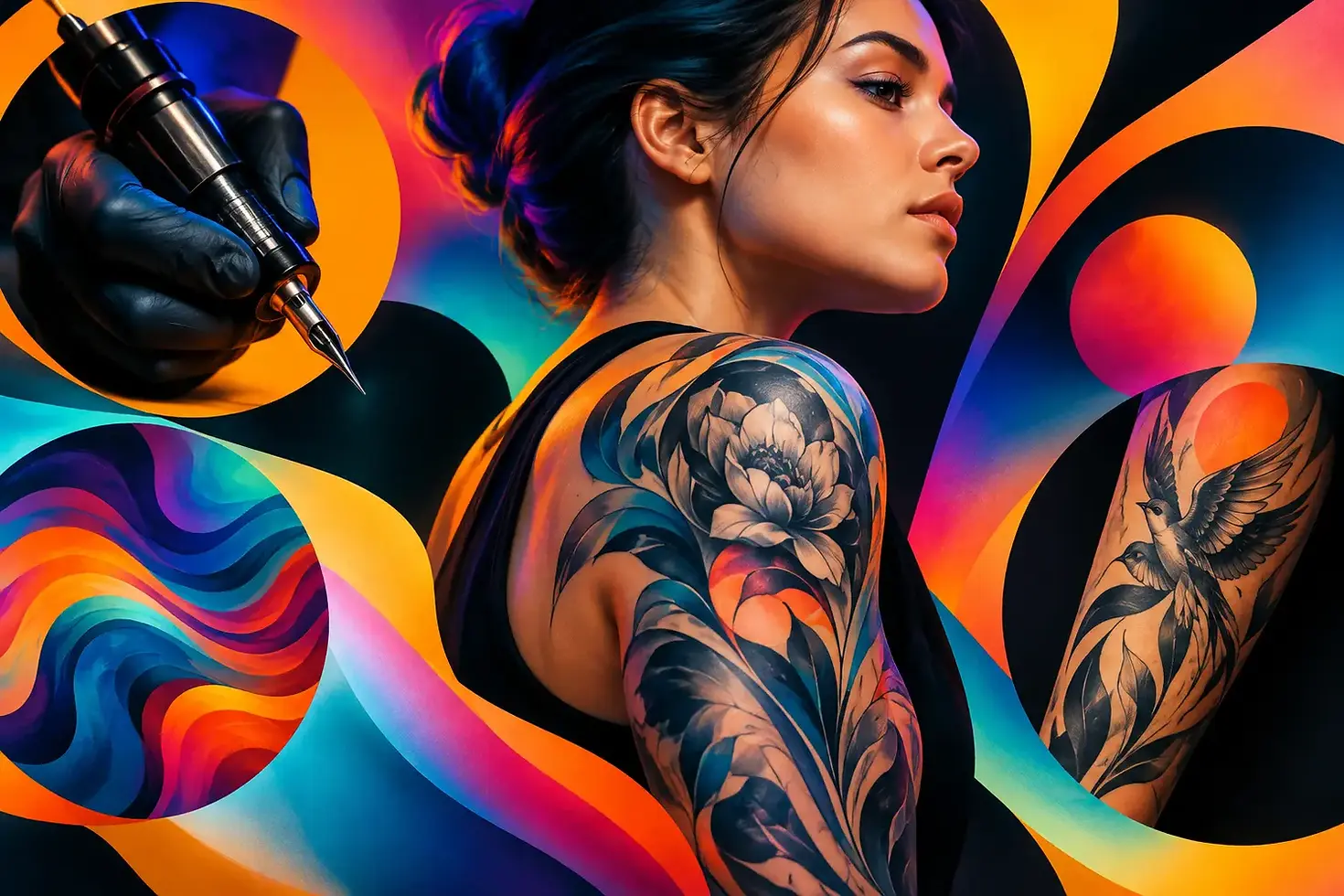
Tattoo Trends 2026 for Custom, Lasting Art
The most compelling tattoo trends 2026 are not about copying a flash sheet or chasing a viral look. They are about choosing work that feels unmistakably yours, then pairing the concept with an artist whose technical style can carry it for years. For clients in the Atlanta and Johns Creek area, that means more intentional consultations, bolder specialization, and a sharper focus on how a tattoo will age on your skin.
A trend can be a useful starting point. It should never replace good composition, experienced application, or a design made for the placement you have chosen. The best tattoos of 2026 will feel current without being disposable.
Tattoo Trends 2026: Personal Style Takes the Lead
The broadest shift is away from one-size-fits-all tattooing. Clients are arriving with stronger visual references, but they are also looking for artists to translate those references into custom work. A favorite anime moment, a K-pop visual era, a nostalgic character, an heirloom object, or a personal symbol can all become the beginning of a tattoo rather than the entire design.
This is especially relevant when the reference comes from a recognizable fandom. A direct image may be exactly what a client wants, but a custom composition can make the finished tattoo feel more collected and considered. An experienced artist can build a scene around the subject, adjust the pose for the body, select a palette that supports the skin tone, and create visual movement that holds up from every angle.
The trade-off is time. Custom work requires clear communication, thoughtful reference gathering, and often a booking process that allows the artist to prepare. The result is worth it when the goal is a tattoo that belongs on your body, not just on a saved social post.
Fine Line Gets More Intentional
Fine line tattoos remain in demand, but the conversation around them is becoming more informed. Delicate botanicals, micro portraits, ornamental details, handwritten elements, and minimal symbols can be beautiful when they are designed at a scale that gives them room to heal and settle.
The trend is not simply “smaller.” It is precision with purpose. Fine line artists are increasingly using negative space, controlled contrast, and clean placement to create tattoos that read clearly without feeling heavy. A fine line sleeve can build gradually over time, while a single placement behind the ear, on the ribcage, or along the forearm can offer a restrained, polished statement.
There are limits to what can remain legible in tiny dimensions. Details that look crisp in a fresh stencil may soften as the skin heals and ages. During a consultation, an artist may recommend increasing the design slightly, simplifying an element, or choosing a placement with enough surface area. That is not a compromise in artistry. It is the kind of technical decision that protects the tattoo’s long-term appearance.
Blackwork and Darker Graphic Designs
Blackwork continues to move in several directions at once. Some clients are drawn to large, high-contrast pieces with bold fields of black and strong geometry. Others prefer intricate illustrative blackwork, ornamental patterning, etching-inspired texture, or cyber-sigilism that feels futuristic and sharp.
What connects these approaches is clarity. Black ink creates immediate visual impact, especially when an artist understands balance, skin breaks, and how to keep a dense design from becoming visually flat. The strongest blackwork uses darkness deliberately. Open skin becomes part of the composition, helping the tattoo breathe and making important shapes readable from a distance.
For clients considering a large blackwork project, placement matters as much as design. The upper arm, thigh, calf, back, and chest offer different opportunities for flow. A design that is striking on a flat screen may need to curve, taper, or open up around joints and muscle structure. This is why artist-led design is essential for pieces meant to wrap or move with the body.
Color Returns With Depth and Contrast
Color tattoos in 2026 are less about using every shade available and more about using color with discipline. Saturated neo-traditional work, rich Japanese-inspired compositions, color realism, and stylized character tattoos are all gaining attention because they create depth, emotion, and a strong visual identity.
Warm reds, deep blues, vivid greens, and carefully placed highlights can make a tattoo feel electric. At the same time, the right palette depends on the image, the client’s skin, and the intended scale. A tiny design packed with multiple colors can lose separation over time, while a larger piece gives the artist room to create smooth transitions and distinct focal points.
Color realism and portrait work require a particularly experienced hand. A believable face, animal, flower, or cinematic image relies on values and contrast before it relies on color. When selecting an artist, look beyond a single fresh photo. Consistency in composition, line quality, saturation, and healed work tells a more complete story.
Nostalgia Is Being Reworked, Not Repeated
Nostalgia remains powerful, from Disney-inspired imagery and classic animation to early-2000s aesthetics, arcade graphics, and pop culture icons. But the more elevated approach is interpretation. Rather than recreating a familiar image exactly as it appears on screen, clients are choosing designs with unexpected framing, decorative motifs, personalized color stories, and mixed-style elements.
A beloved character can be paired with florals, transformed through watercolor effects, rendered in black and grey realism, or set inside a neo-traditional composition. The style should support the emotional reason behind the tattoo. A playful memory may call for expressive color. A tribute may feel more appropriate in refined black and grey. The right choice depends on the story you want the work to carry.
Placement Is Part of the Artwork
Placement is no longer an afterthought. Tattoos are being planned around visible moments of the body: a collarbone piece that follows natural structure, a shoulder design that frames the arm, a calf tattoo that reads while walking, or a hand-adjacent detail that remains intentionally subtle.
Patchwork collections are also becoming more curated. Instead of filling open space with unrelated images, clients are considering a shared visual language. That may be a consistent line weight, a limited color palette, recurring motifs, or a single artist’s illustrative approach. A collection does not need to match perfectly, but it should feel like it was assembled with care.
Highly visible placements deserve an honest discussion. Hands, fingers, feet, and areas exposed to frequent friction may heal differently and can require more maintenance than protected placements. Career considerations, sun exposure, and lifestyle all matter. A professional studio will discuss these realities before the appointment, not after the tattoo is complete.
The Lasting Trend Is Better Decision-Making
The most meaningful movement behind tattoo trends 2026 is higher client awareness. People are asking about hygiene standards, artist specialization, healing expectations, and design longevity. They are taking time to find an artist whose portfolio matches the exact look they want instead of treating tattooing as interchangeable.
That is good for clients and for the art form. Tattooing is both creative and technical. Sterile procedures, proper aftercare guidance, thoughtful placement, and honest consultations are inseparable from a beautiful result. For first-time clients, this level of care can make the process feel grounded rather than intimidating. For experienced collectors, it is how a new piece earns its place among the work they already wear.
At Once in a Blue Moon Tattoo, the strongest starting point is not asking what everyone else is getting. It is arriving with the feeling, subject, placement, and style you are drawn to, then allowing the right specialist to shape it into work that is distinctly yours.
Choose the trend if it speaks to you. Choose the artist, scale, and placement with enough care that it still speaks to you long after the trend has moved on.


Comments