
.jpg)
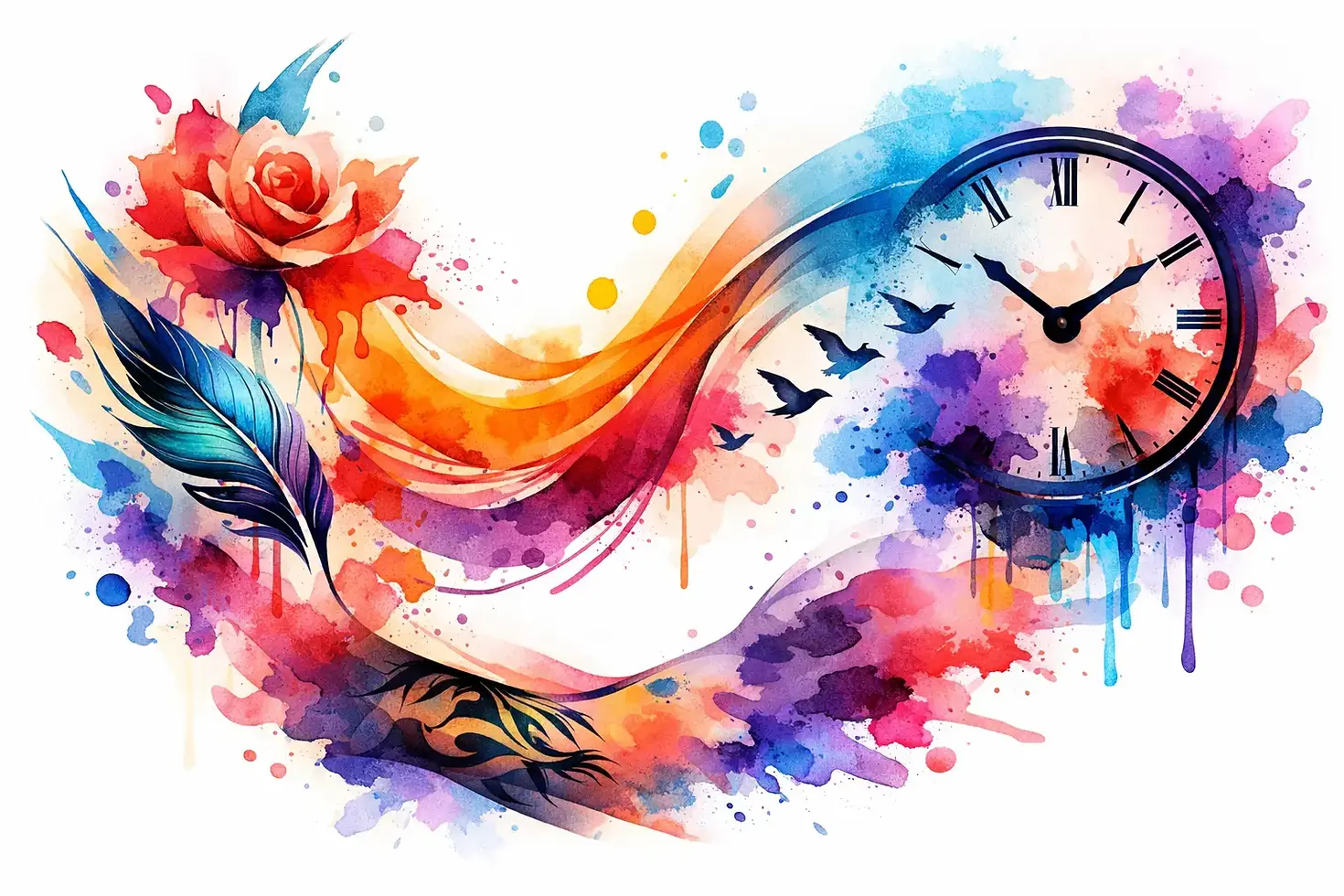
Watercolor Tattoo Longevity Explained
A watercolor piece can look almost weightless on fresh skin - soft blends, painterly edges, and color that feels more like movement than outline. But when clients ask about watercolor tattoo longevity, they are usually asking a more practical question: will it still look beautiful years from now, or will it blur into something unfinished?
That question deserves a precise answer. Watercolor tattoos can age well, but they do not age the same way as bold traditional work or heavily lined blackwork. Their longevity depends on how the design is built, how the color is applied, where it sits on the body, and how seriously the client takes healing and long-term skin care. The style is expressive, but the execution has to be disciplined.
What watercolor tattoo longevity really depends on
Watercolor is a visual style, not a shortcut in technique. The best healed results usually come from artists who understand how to create softness without sacrificing structure. In many cases, that means using intentional linework, contrast, or darker anchor points beneath the painterly effects so the tattoo still has definition as the skin naturally changes over time.
This is where expectations matter. A watercolor tattoo is not meant to age like a bold American traditional rose with thick black borders. It is meant to keep its identity as a softer, more atmospheric piece. That can be stunning when designed correctly. It can also fade into a less readable image if the artist relies only on pale washes with no framework at all.
Pigment choice also matters. Lighter tones such as pastel pink, soft yellow, and pale blue tend to fade faster than dense black or deeply saturated jewel tones. That does not mean light color should never be used. It means the composition has to account for the fact that some shades are less durable on skin than they appear on paper or on a fresh tattoo.
Why some watercolor tattoos hold up better than others
The strongest watercolor tattoos usually balance softness with strategy. A floral piece may have airy splashes around it, but the petals themselves often need shape and contrast. An abstract design may look freeform, but it still benefits from focal points that keep the eye oriented once the brightest top-layer freshness settles.
Skin tone is part of that equation too. Watercolor can work beautifully across a range of skin tones, but not every palette performs the same way on every person. An experienced artist will adjust color selection and saturation so the final result complements the client rather than chasing a reference image that only worked on a different complexion.
Placement has a major impact as well. Areas with high friction, frequent sun exposure, or constant movement usually show wear faster. Hands, fingers, feet, and sometimes the inner arm can be more challenging for watercolor work if the design depends on delicate transitions. The upper arm, outer forearm, thigh, calf, and back often provide a more stable canvas.
Then there is size. Tiny watercolor tattoos are often the most vulnerable to aging poorly. When a design is very small and depends on subtle color variation rather than strong shape, those details can soften quickly. A larger piece gives the color room to breathe and gives the artist room to create structure that lasts.
Common fading patterns in watercolor tattoos
When watercolor tattoos fade, they do not always fail dramatically. More often, they simply lose some of the crisp contrast that made them feel vivid at first. Pale tones may become even softer. Edges that once looked intentionally diffused can start to look less distinct. If the design had no linework or dark values to support it, the image may become harder to read from a distance.
That is why watercolor tattoo longevity is often less about whether the tattoo fades at all and more about how gracefully it fades. Every tattoo ages. The goal is not permanence in a literal sense. The goal is a design that still looks intentional after the initial brightness settles and after years of normal skin changes.
This is also why healed portfolio work matters more than fresh photos alone. Fresh watercolor tattoos can look striking on social media because the color sits bright on recently tattooed skin. Healed work tells the real story. It shows whether the artist understands longevity, not just first-day impact.
How to improve watercolor tattoo longevity
Aftercare has a direct effect on how well a watercolor tattoo heals, especially in the first few weeks. Picking, over-moisturizing, heavy friction, and premature sun exposure can all interfere with clean healing. Following studio instructions closely is not a small detail. It is part of preserving the finish of the work.
Long-term care matters just as much. UV exposure is one of the fastest ways to dull color tattoos, especially lighter shades. Daily sunscreen on exposed tattoos helps preserve vibrancy and contrast. Well-hydrated skin also tends to show tattoos more clearly over time, which is one reason artists often talk to clients about skin care as part of tattoo care.
Touch-ups can also be part of the conversation. Not every watercolor tattoo needs one, and not every client wants one. But for pieces that rely on delicate saturation shifts, a refresh years later can be completely reasonable. That is not a sign the tattoo was done poorly. It is often just the reality of a style built around softness rather than heavy visual armor.
Is watercolor a bad choice if you want a tattoo that lasts?
Not necessarily. It depends on what you mean by lasts.
If your priority is the most durable, high-contrast tattoo style possible, bold blackwork, traditional, or strong neo-traditional designs usually have an advantage. They are built to stay legible with less effort. If your priority is a more painterly, contemporary, and expressive effect, watercolor may be the right choice - as long as you accept that the design needs smart planning and that maintenance may be part of the long-term picture.
For many clients, that trade-off is worth it. They are not looking for the heaviest outline possible. They want movement, softness, and color storytelling. The key is choosing an artist who knows how to translate that vision into skin without treating longevity as an afterthought.
Questions to ask before booking a watercolor tattoo
Before committing to the style, ask to see healed examples, not just fresh work. Look for tattoos that still read clearly after months or years. Ask how the artist approaches structure in watercolor pieces, what colors they recommend for your skin tone, and whether your preferred placement supports the effect you want.
It is also smart to ask whether your concept would benefit from linework, black shading, or stronger contrast than you originally imagined. Clients sometimes assume a true watercolor tattoo should have no structure at all, but that idea can work against longevity. The best artist for the job will explain where softness belongs and where support is necessary.
At a specialized studio, this conversation should feel collaborative and informed, not rushed. Once in a Blue Moon Tattoo approaches custom work with exactly that standard - matching style, placement, and technical execution to the result the client wants to live with long term.
When watercolor works best
Watercolor is often strongest in medium to large designs, artistic concepts with natural flow, and pieces where color movement is part of the story. Florals, animals, abstract accents, celestial themes, and illustrative designs can all work beautifully. It is especially effective when paired with an artist who understands both color theory and restraint.
It tends to be less forgiving when the concept is extremely small, overly pale, or placed in a high-wear area without any structural support. That does not make those ideas impossible. It just means they require a more honest conversation about aging and expectations.
A well-designed watercolor tattoo should still feel like art after the fresh stage passes. Not identical to day one, but still balanced, readable, and intentional. That is the standard worth aiming for.
If you love the style, do not let fading myths make the decision for you. Let design quality, artist specialization, and realistic expectations guide it instead. The most beautiful tattoos are not the ones that promise perfection forever. They are the ones created with enough skill and foresight to keep looking like themselves.


Comments